
Updated 18 December 2025 at 19:15 IST
SC Verdict Redefines Aravallis: What Supreme Court’s Ruling Changes & Why it Matters | Explained
By adopting the recommendations of a committee led by the Ministry of Environment, Forest and Climate Change (MoEFCC), the Apex Court's ruling may result in increased mining operations in regions previously shielded by strict environmental regulations, according to experts.
- India News
- 3 min read

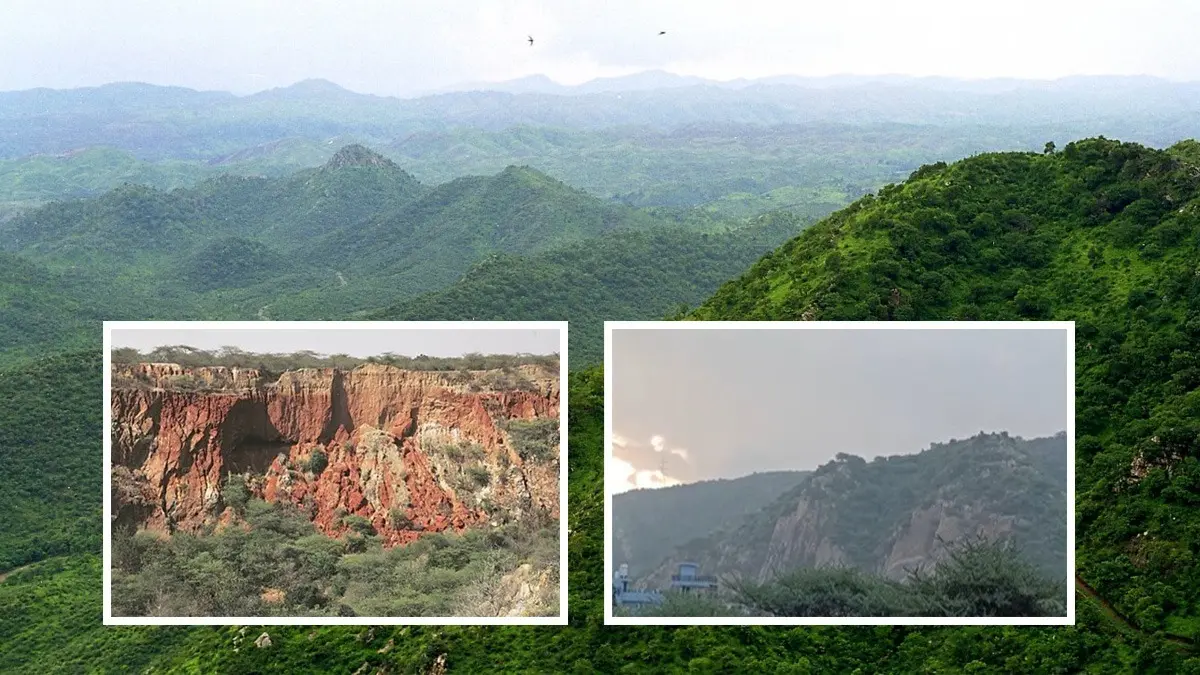
In a significant legal shift on November 20, 2025, the Supreme Court of India officially narrowed the definition of the Aravalli Hills, believed to be around 670 million years old, a move that environmentalists warn could strip protection from over 90% of the ancient mountain range.
The apex court's ruling has sparked a debate over the survival of one of the world's oldest mountain ranges.
By adopting the recommendations of a committee led by the Ministry of Environment, Forest and Climate Change (MoEFCC), the Apex Court's ruling may result in increased mining operations in regions previously shielded by strict environmental regulations, according to experts.

About the Aravalli Ranges
Spanning 650 km from Delhi to Gujarat, the Aravalli Range acts as a vital ecological backbone for Northern India. These mountains serve as a massive natural water-recharge system, feeding essential rivers like the Chambal, Sabarmati, and Luni.
Advertisement
The region is also a geological treasure trove, rich in sandstone, limestone, marble, and granite along with lead, zinc, copper, gold, and tungsten.
While these resources have been harvested for centuries, the last forty years have seen a shift toward intensive quarrying for stone and sand, putting significant pressure on this ancient landscape.
Advertisement
The New Definition
The Supreme court’s ruling establishes a specific physical threshold for what constitutes a "protected" hill.
Elevation Threshold: Only landforms with an elevation of 100 metres or more above the local relief are classified as "Aravalli Hills."
The Mining Loophole: Any hills or landforms falling below this 100-metre mark are now exempt from mining prohibitions.
Range Connectivity: Two or more hills are considered part of the "Aravalli Range" only if they are situated within 500 metres of one another.
The Regulatory Shift: The court argued that total prohibitions often backfire by fueling mining mafias. Instead, it ordered a Management Plan for Sustainable Mining (MPSM) to balance extraction with restoration, modeled after the plan used for the Saranda forests.
Ecological Implications
While the court also accepted guidelines for "sustainable mining" and measures to curb illegal extraction, the reclassification has sparked serious concern regarding the long-term health of Northwest India.
Critical Ecological Risks
Experts and citizens' collectives, such as People for Aravallis, warn that excluding 91% of the range from protection could lead to catastrophic regional consequences:
Desertification: The Aravallis act as a barrier against the Thar Desert. Previous illegal mining has already created 12 "gaps" in the range, allowing desert dust to drift into Delhi-NCR, worsening air quality.
Water Crisis: The range's fractured rock formations serve as vital groundwater recharge zones, replenishing roughly 2 million litres of water per hectare.
Habitat Fragmentation: Low-elevation systems, now exempt from strict mining bans, provide essential corridors for wildlife; their destruction is expected to escalate human-wildlife conflict.
Current Status of Mining
While the court has allowed existing legal operations to continue under strict safeguards, it has imposed a temporary freeze on all new mining leases and renewals. This stay will remain in effect until a comprehensive geographical mapping of the landscape is completed and the final MPSM is approved.
Get Current Updates on India News, Entertainment News, Cricket News along with Latest News and Web Stories from India and around the world.
Published By : Ankita Paul
Published On: 18 December 2025 at 19:13 IST