
Updated 25 November 2025 at 16:13 IST
From Formation To Movement- All About Ethiopian Hayli Gubbi's Volcanic Ash Cloud
Ethiopia's Hayli Gubbi volcano's ash plume is heading towards northwest India, including Rajasthan, Delhi-NCR, and Punjab by Monday Night. The flight operations have also been disrupted as a precautionary measure. Read all about the ash cloud formation, journey and its effect on environment below.
- Science News
- 3 min read

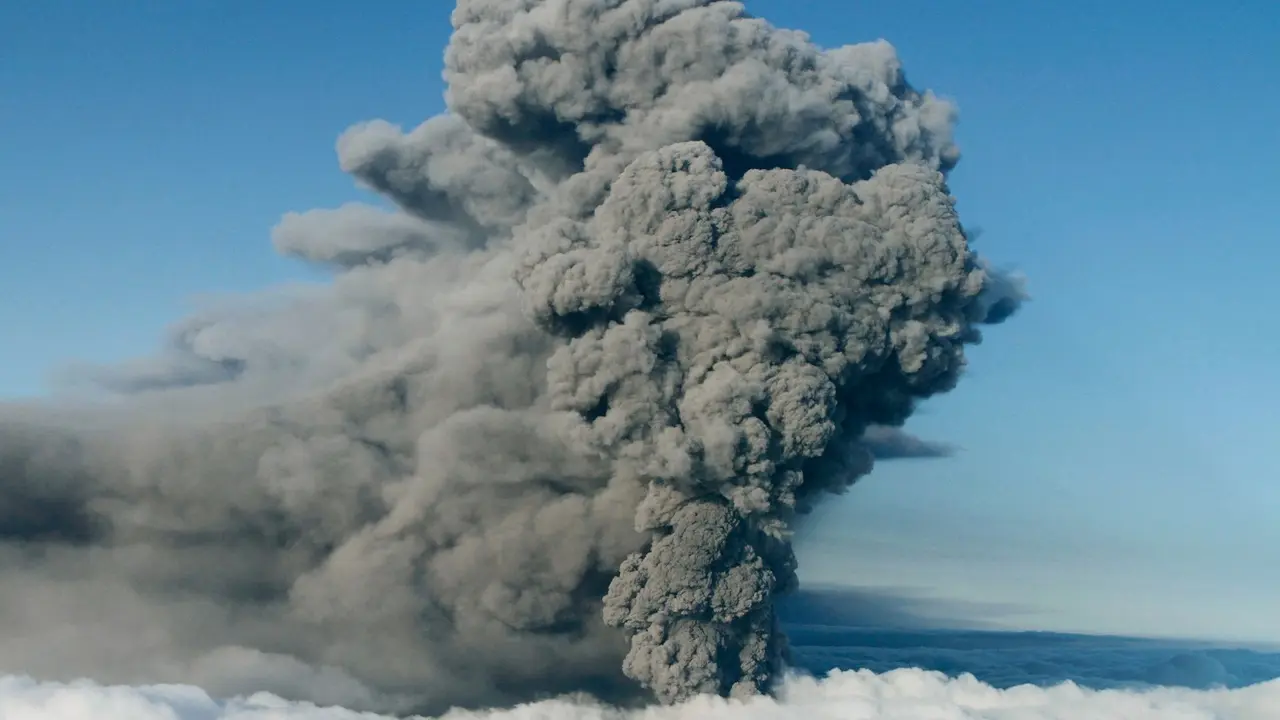
New Delhi: A massive ash cloud from Ethiopia's Hayli Gubbi volcano, which was generated after the long-silent volcano erupted for the first time in nearly 10,000 years, has begun drifting towards the Indian skies. As per scientists, the volcanic ash could drift into Gujarat by 10 pm and then spread across Rajasthan, North-Western Maharashtra, Delhi-NCR, Haryana, Punjab and the Himalaya foothills. Following the ash-related disruption, the flight operations were widely affected in the country and reports suggest India might also witness hazy skies. Furthermore, several diversions were also seen in the aviation sector and it is speculated that the ash comprising silica, rocky material and gases like SO2 may affect the air quality in India. However, IMD stated that the plumes would mainly impact flight operations as they were moving at heights of around 10-15km above the surface.
What is Hayli Gubbi's volcanic ash cloud?
The volcanic ash cloud is made of tiny, sharp particles of rock, minerals and volcanic glass. The formation of the particles take place following the volcano's eruption which prompts the magma inside to shatter into microscopic pieces. These particles shoot upward with enormous force, forming a forming a towering cloud that can rise 10–20 km into the atmosphere and following this, the particles get carried away by winds on a gigantic scale at extremely high altitudes. Once airborne, the ash from volcano can remain in the atmosphere for days or even weeks, thereby drifting with the wind.
Journey of ash cloud
Rising magma carries trapped gases and when the pressure in an eruption suddenly gets reduced, these trapped gases expand violently. The explosion is such that the magma blasts into fine particles and gets shoot high into the air. When the cloud reaches the upper layer of the atmosphere, the long journey begins where it is carried by strong winds that circles the planet. As ash clouds can stay suspended for a long time, they can travel father than one can imagine. Reports say that the current plume is currently making its way across India after sweeping across the Red Sea toward Oman and Yemen.
Effect on Flights and Environment
Volcanic ash poses major hazard for aircrafts as they can easily melt inside jet engines, damage the blades and even interfere with sensors. Many airlines, including Air India and Akasa Air, on Tuesday delayed and cancelled a number of flights following the thick plume of ash. As airlines modified operations in response to the ash-related disruption, at Delhi's Indira Gandhi International Airport, several international flights bound for destinations such as Hong Kong, Dubai, Jeddah, Helsinki, Kabul and Frankfurt were delayed, reflecting the wider operational disruption.
Advertisement
According to the India Meteorological Department (IMD), ash clouds from the volcanic eruption in Ethiopia are likely to clear India's skies by 7:30 pm on Tuesday. If the ash settles close to the surface, it can irritate the lungs, eyes and skin and worsen the air quality. In this case, the plume is moving at 10–15 km altitude, so it will mainly affect the flight operations.
Advertisement
Published By : Amrita Narayan
Published On: 25 November 2025 at 16:13 IST